In March 2026, Professor Chen Xiaoqiang and Professor Li Mingle from the College of Materials Science and Engineering of Shenzhen University published a paper titled “Preparation of ENBSe-based photoredox catalysts for O2-independent phototherapy in living systems” in Nature Protocols. This work is a continuation of their research previously published in the Journal of the American Chemical Society.
Cancer is a deadly disease worldwide, and the hypoxic environment of tumours has become a major bottleneck for traditional photodynamic therapy, which relies on oxygen to produce reactive oxygen species to kill tumour cells, and this inherent flaw seriously limits its clinical translation and effectiveness. Although photo-redox catalysis has been used in the biomedical field, traditional catalysts often have issues like short absorption wavelengths and potential biotoxicity. Against this backdrop, developing new photocatalysts that don't rely on oxygen, are highly targeted, and biocompatible has become an urgent need to overcome the challenges of treating hypoxic tumours with light therapy.
This paper addresses the limitations of traditional photodynamic therapy, which relies on oxygen and is restricted by the hypoxic tumour microenvironment, by developing ENBSe, a selenium-substituted Nile blue derivative that is a metal-free, near-infrared responsive photoredox catalyst independent of oxygen. It also constructs the ENBSe–NTR system, a conditionally activated photoredox catalyst responsive to the hypoxic tumour microenvironment, and provides standardised experimental protocols for their synthesis, characterisation, and in vivo and in vitro applications. The content mainly includes the following steps: (1) synthesis of the photoredox catalyst ENBSe; (2) evaluation of photoredox catalytic performance; (3) construction of the conditionally activated photoredox (ConAPC) system; (4) establishment of a hypoxic cell model; (5) comprehensive verification of ENBSe’s photocatalytic therapeutic capability both in vitro and in vivo. This research overcomes the oxygen-dependence bottleneck of traditional phototherapy and offers a new strategy for targeted phototherapy of hypoxic tumours. Its standardised experimental protocols also provide important references for the development and application of new photoredox catalysts, advancing the field of photocatalytic diagnosis and therapy.
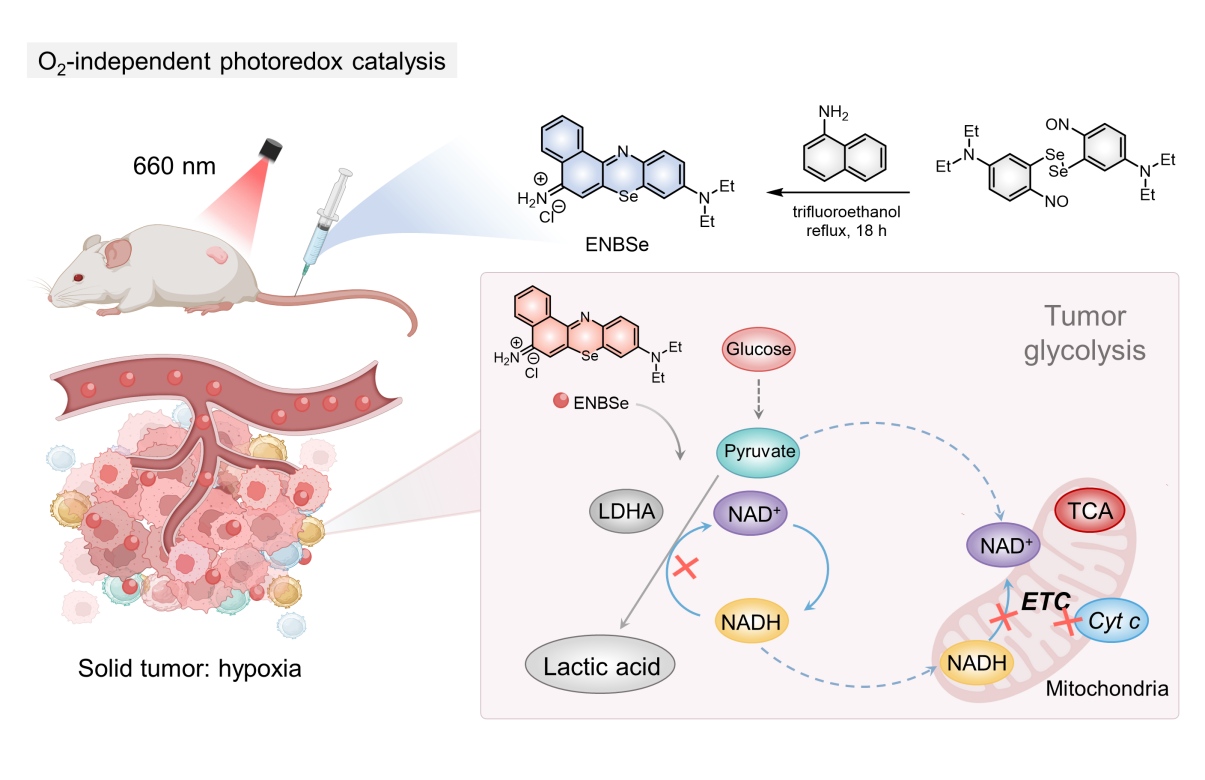
Figure 1: Schematic illustration of anaerobic-dependent photoredox-catalyzed cancer therapy.
Postdoctoral researcher Zhang Yingying from the team is the sole first author of the paper, Professor Li Mingle is the sole corresponding author, and Shenzhen University is the first author and first corresponding institution.
Paper link: https://www.nature.com/articles/s41596-025-01328-4.
Proofread by: Zhang Xiaoying, Wang Dong, Wang Lei