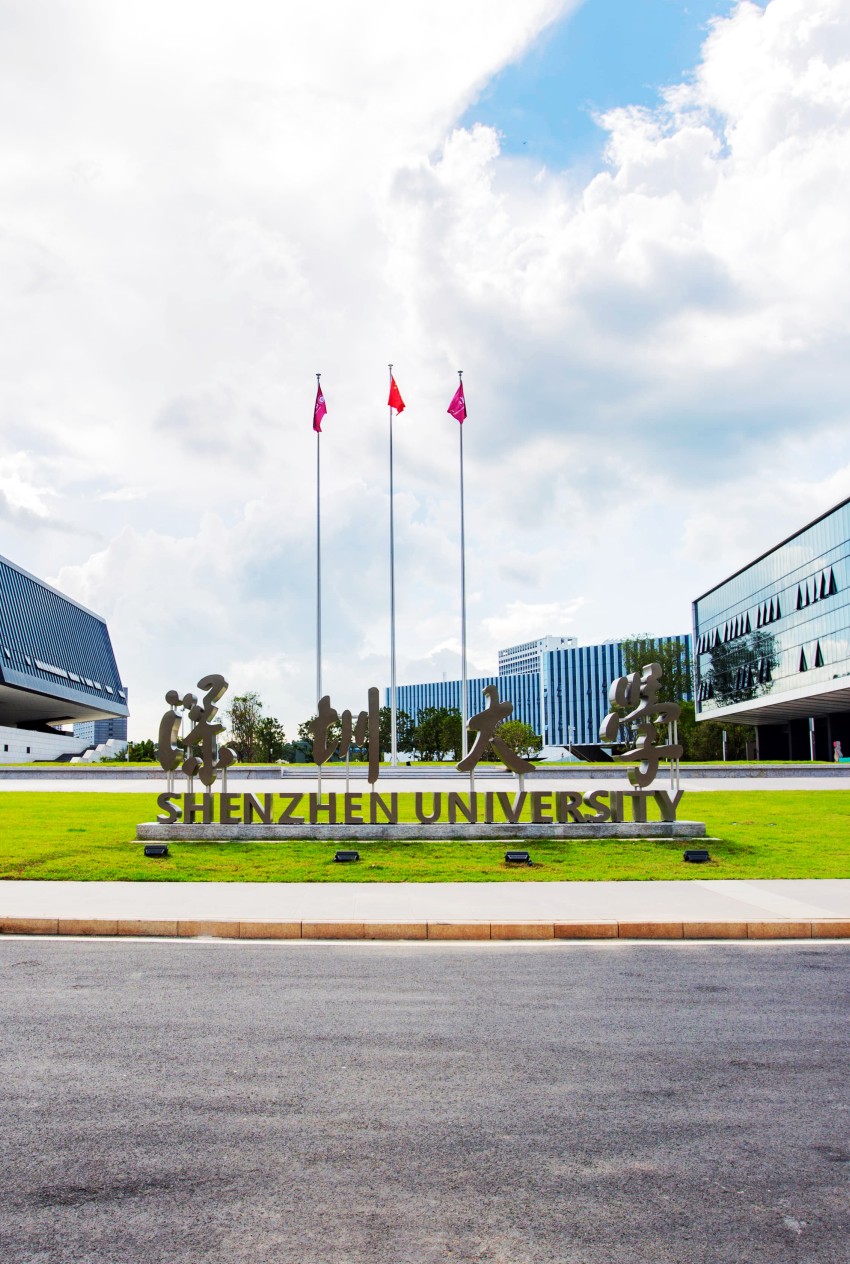
Recently, Dr. Akbar Bashir, a postdoctoral researcher from the research team led by Professor Dazhu Chen at the College of Materials Science and Engineering of Shenzhen University, published a research article in Advanced Functional Materials, entitled “Interface-Engineered BN/MXene Composites for Anisotropic Thermal Conduction and Solid-Solid PCM Buffering”. Dr. Akbar Bashir (postdoc, Shenzhen University) is the first author. Researcher Zhengde Lin and Professor Dazhu Chen serve as corresponding authors. Shenzhen University is the primary affiliation of this work.
Efficient thermal dissipation has become a critical challenge for next-generation electronic devices and lithium-ion battery systems due to increasing power density and localized heat accumulation. Although phase-change materials (PCMs) can buffer transient heat through reversible thermal energy storage, their intrinsically low thermal conductivity (TC) severely limits practical applications. Meanwhile, conventional thermally conductive fillers often sacrifice electrical insulation, creating a long-standing trade-off between thermal transport and dielectric reliability.
To overcome the trade-off between TC and electrical insulation, the research team developed a vertically aligned BN/MXene hybrid framework by integrating amine-functionalized boron nitride (f-BN) nanosheets with Ti3C2Tx MXene through directional freeze-casting. Chemically integrated Ti-O-C, Ti-O-N, and B-N-NH2 interfacial linkages established continuous phonon-transport pathways with reduced interfacial thermal resistance. The resulting composite achieved a high through-plane TC of 3.376 W m−1 K−1 at only 14 wt.% filler loading while maintaining a latent heat of 108 J g−1 and a high electrical resistivity of 1.68 × 10¹² Ω·cm. The vertically aligned lamellar architecture enabled efficient anisotropic heat conduction, while MXene served as a nanoscale phonon bridge strengthening interfacial coupling between adjacent BN nanosheets. The composite further exhibited excellent thermal reliability, retaining over 96% of its latent heat after 100 thermal cycles. Device-level evaluations demonstrated outstanding thermal management capability, reducing CPU and lithium-ion battery-module temperatures by approximately 10.0 °C and 7.6 °C, respectively.
This work establishes an effective strategy for integrating interface engineering with anisotropic structural design to simultaneously achieve high thermal conductivity, electrical insulation, and thermal-energy regulation, providing important insights for next-generation multifunctional thermal-management materials.
Figure 1. Interface�engineered BN/MXene channels endow the electrically�insulating composite with anisotropic thermal conduction capability, efficient thermal�energy buffering capacity and enhanced multifunctional performances.
Acknowledgements: This work is supported by the National Natural Science Foundation of China, Guangdong Basic and Applied Basic Research Foundation, and Shenzhen Key Basic Research Program.
Article Link: https://doi.org/10.1002/adfm.75807
Proofread by: Xiaoying Zhang, Dong Wang, Lei Wang