With the rapid development of portable electronic devices, electric vehicles, and large-scale energy storage systems, the market has an increasingly urgent demand for batteries with high energy density, high safety, and long cycle life. All-solid-state lithium-ion batteries adopt non-flammable solid electrolytes, fundamentally eliminating the risk of thermal runaway and exhibiting wide-temperature-range adaptability, and are regarded as the core candidate for next-generation energy storage technologies. Among them, argyrodite-type sulfide solid electrolytes (e.g., Li5.5PS4.5Cl0.8Br0.7, abbreviated as LPSCB) feature outstanding room-temperature ionic conductivity and favorable machinability. When paired with Ni-rich layered NCM83 cathodes, they hold great promise for constructing high-specific-energy battery systems. Nevertheless, severe compatibility issues exist at their solid-solid interface: band mismatch hinders Li+ transport; the high operating voltage induces oxidative decomposition of sulfide electrolytes; and volume expansion/contraction of the cathode during cycling leads to contact failure. Especially under fast-charging conditions, large current further amplifies these side reactions, resulting in rising interfacial impedance, degraded power output, and shortened cycle life.
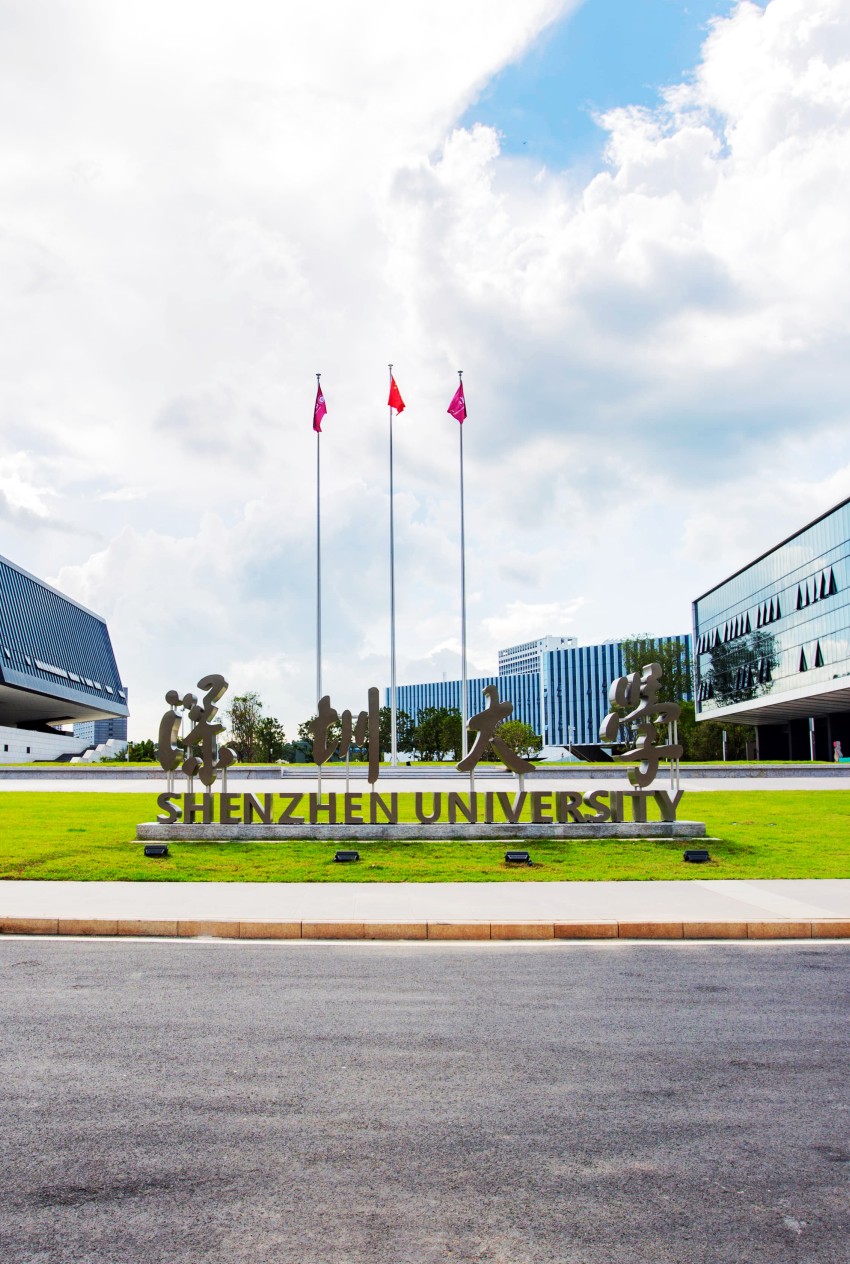
Recently, the research group led by Professor Liu Guangliang at Shenzhen University has made an important breakthrough addressing this interfacial challenge. The relevant results have been published in Advanced Functional Materials, with the paper entitled "Interfacial Electronic Structure Regulation via Dual Built-In Electric Fields in Sulfide Solid Electrolytes". The research team proposes an active interfacial-charge modulation strategy. A ferroelectric-like WO2Cl2 (WOC) coating layer is introduced on the surface of LPSCB. The synergistic effect of work-function mismatch and spontaneous polarization is exploited to construct "dual built-in electric fields", which can accelerate rapid Li+ transport across the interface and effectively suppress electron leakage. Thereby, the interfacial incompatibility between sulfide electrolytes and Ni-rich cathodes is resolved from the perspective of electronic structure. Professor Liu Guangliang and Assistant Researcher Li Wenjin from Shenzhen University serve as the corresponding authors, and Postdoctoral Researcher Zhang Ruonan is the first author. Shenzhen University is the primary affiliation of this work.
In this study, Liu’s team proposes the synergistic modulation of interfacial electron- and ion-transport behaviors enabled by WOC. Specifically, WOC possesses a high work function. When sandwiched between the electrolyte and the cathode, it generates driving forces for electron migration on both sides (LPSCB→WOC, NCM83→WOC), establishing dual built-in electric fields. Electrons are effectively "trapped" within the WOC layer, preventing their penetration into the SSE and the subsequent induced reductive decomposition. Meanwhile, WOC exhibits intrinsic ferroelectric-like characteristics; its spontaneous-polarization field superimposes on the interface to further lower the migration barrier for Li+. In addition, the reaction energy between WOC and NCM83 is low, which avoids introducing new interfacial side reactions. Combined with multi-dimensional experimental characterizations, the dual-functional mechanism of WOC has been clarified: on the one hand, it inhibits the oxidative decomposition of sulfide electrolytes under high voltage and reduces the accumulation of high-impedance interfacial byproducts; on the other hand, it mitigates mechanical cracking of cathode particles and greatly improves cycling stability (Figure 1). This research demonstrates that interfacial electronic-structure regulation is expected to go beyond conventional passivation strategies and become a universal new paradigm for interface design.

Figure 1. Schematic illustration of WOC-mediated interfacial electronic-structure engineering strategy
Project Support: Shenzhen Science and Technology Innovation Bureau, Shenzhen Basic Research General Program (Grant No. JCYJ20240813142900001), Design of Surface Oxygen-Guardrail for Ultra-High-Nickel Cathodes toward Highly-Stable All-Solid-State Lithium Batteries. Project period: Nov. 27 2024 – Nov. 26 2027. Funding: 300,000 CNY. Status: Ongoing. Principal Investigator: Assistant Researcher Li Wenjin.
Article link: https://doi.org/10.1002/adfm.77180